The effects of peer education on reduction of the HIV/sexually transmitted infection risk behaviors among Turkish university students
Bulduk, S.; Erdogan, S.
Journal of the Association of Nurses in Aids Care Janac 23(3): 233-243
2012
ISSN/ISBN: 1055-3290 PMID: 21497520 DOI: 10.1016/j.jana.2011.02.003Document Number: 552805
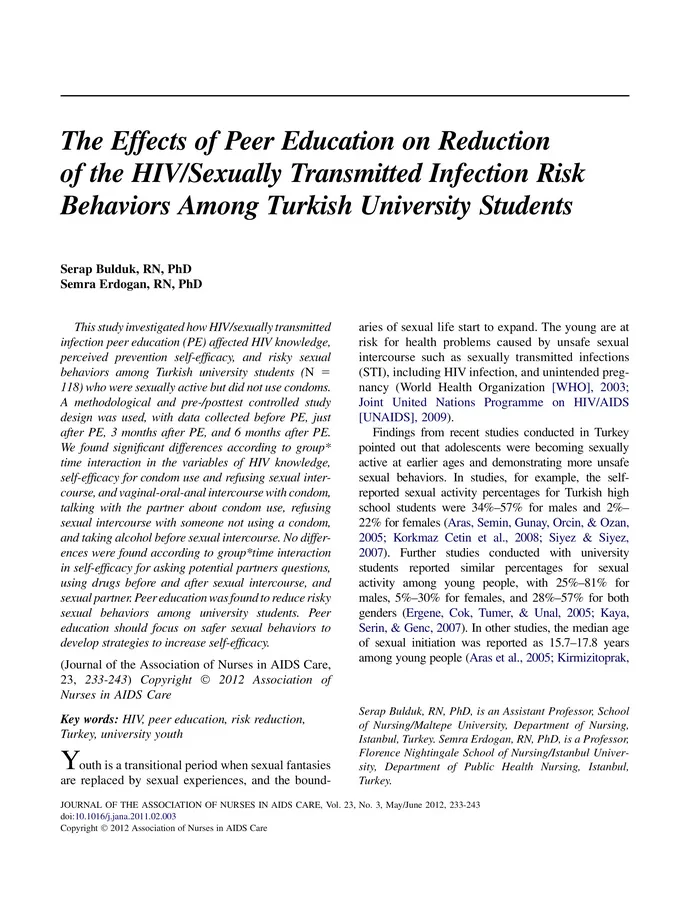
This study investigated how HIV/sexually transmitted infection peer education (PE) affected HIV knowledge, perceived prevention self-efficacy, and risky sexual behaviors among Turkish university students (N = 118) who were sexually active but did not use condoms. A methodological and pre-/posttest controlled study design was used, with data collected before PE, just after PE, 3 months after PE, and 6 months after PE. We found significant differences according to group*time interaction in the variables of HIV knowledge, self-efficacy for condom use and refusing sexual intercourse, and vaginal-oral-anal intercourse with condom, talking with the partner about condom use, refusing sexual intercourse with someone not using a condom, and taking alcohol before sexual intercourse. No differences were found according to group*time interaction in self-efficacy for asking potential partners questions, using drugs before and after sexual intercourse, and sexual partner. Peer education was found to reduce risky sexual behaviors among university students. Peer education should focus on safer sexual behaviors to develop strategies to increase self-efficacy.
Document emailed within 0-6 h